What is Clifton Urban Forest?
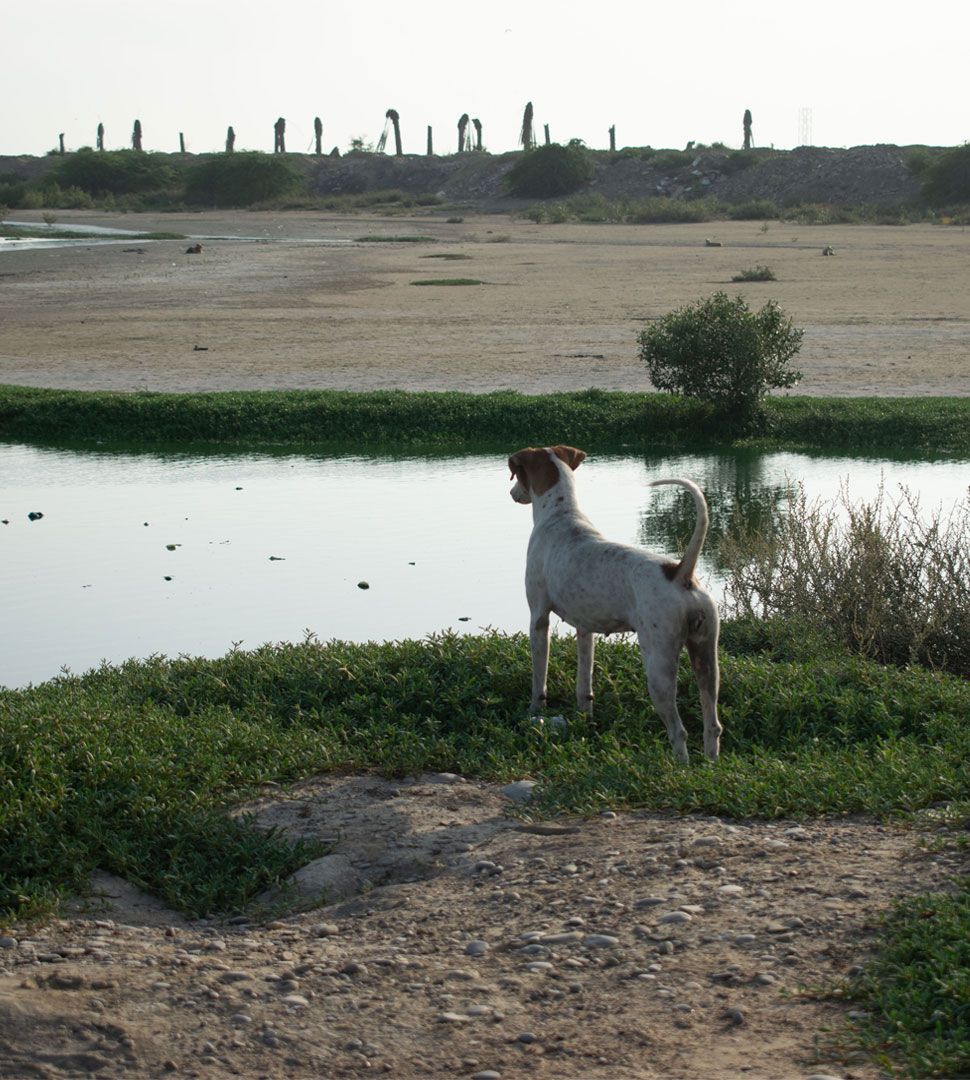
Clifton Urban Forest is a 200-acre urban forest project located near the Clifton seaside in Karachi, Pakistan. ‘Established’ on January 8, 2021, under the leadership of entrepreneur and climate activist, Masood Lohar, this project was developed using the Miyawaki technique, a method known for its ability to create dense forests in a short time without the use of chemicals or pesticides. The structure relies on using an artificial lagoon and mudflats to attract various species of birds and wildlife. The forest now contains over 800,000 tree saplings, including native species like moringa, sukhchain, oleander, date palms, and wild almonds.
“Follow the path right in front of you and you will find the jheel, and on your right and left there’s the junglaat, I can lead you through it.” – Imran (caretaker)
The Urdu word junglaat directly translates to a dense growth of trees, shrubs and vegetation. As Karachiites, the students encountered the word jungli in many contexts—a passing comment about stray dogs rummaging through trashcans on a street corner, or a rude driver honking excessively in traffic. Junglaat, as a concept, implies a sense of “wildness” and “uncertainty”—qualities that reflect not only their experiences as Karachiites, but also their urban relationship with nature, flora, and fauna.

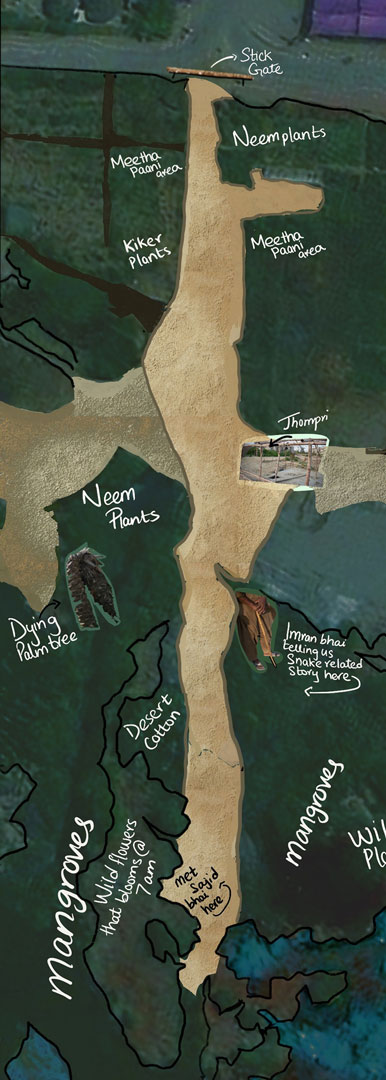
Natural and Constructed Ecologies of Karachi’s Clifton Urban Forest
As the students mapped, photographed and recorded their way down to the edge of the forest, where an inlet of the Arabian Sea meets the over-stretched reclaimed coastline of Karachi, they thought about:
How do the different plants, their caretakers, and the animals around them interact with each other?
How do plants need each other and in which ways do they take and give to each other?
What makes a plant wild, and what makes an animal wild? What are some of our definitions/interpretations on “wildness”?
Which symbiotic relationships, relationships of survival, of community can we witness at this site?

Meetha Pani & Khara Pani
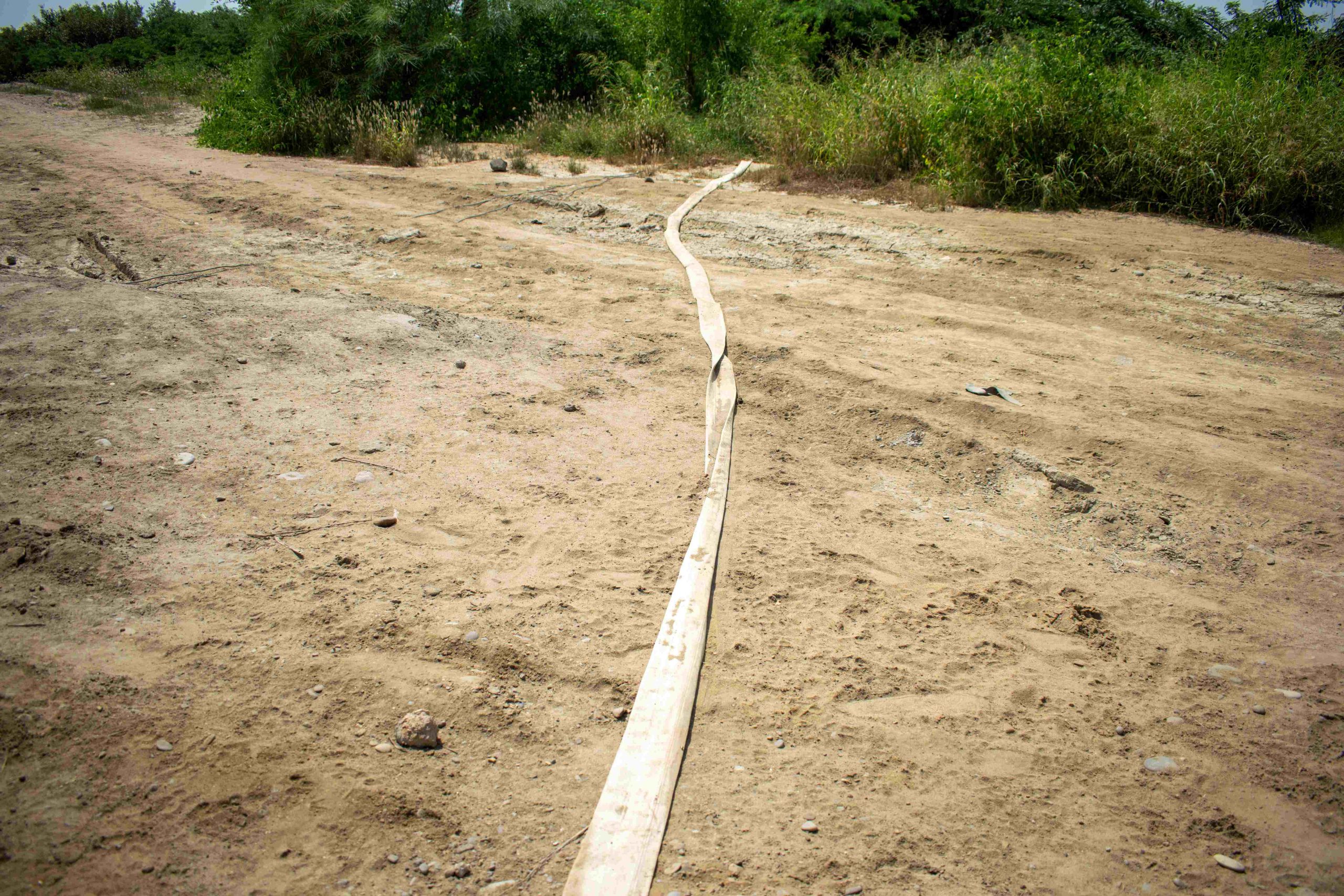
”Some plants in the forest receive their nutrition from steady supply of meetha paani (fresh water). What was interesting about this was that there is a mixture of plants that grow “by themselves” – nobody planted them, they just grew. Others, like the bayhop vines, were planted with permission from Masood Lohar, and are able to withstand saline water and dry soil. There are also various fruits and vegetables growing near the jhompri and the entrance of the forest, closest to the meetha paani supply.”
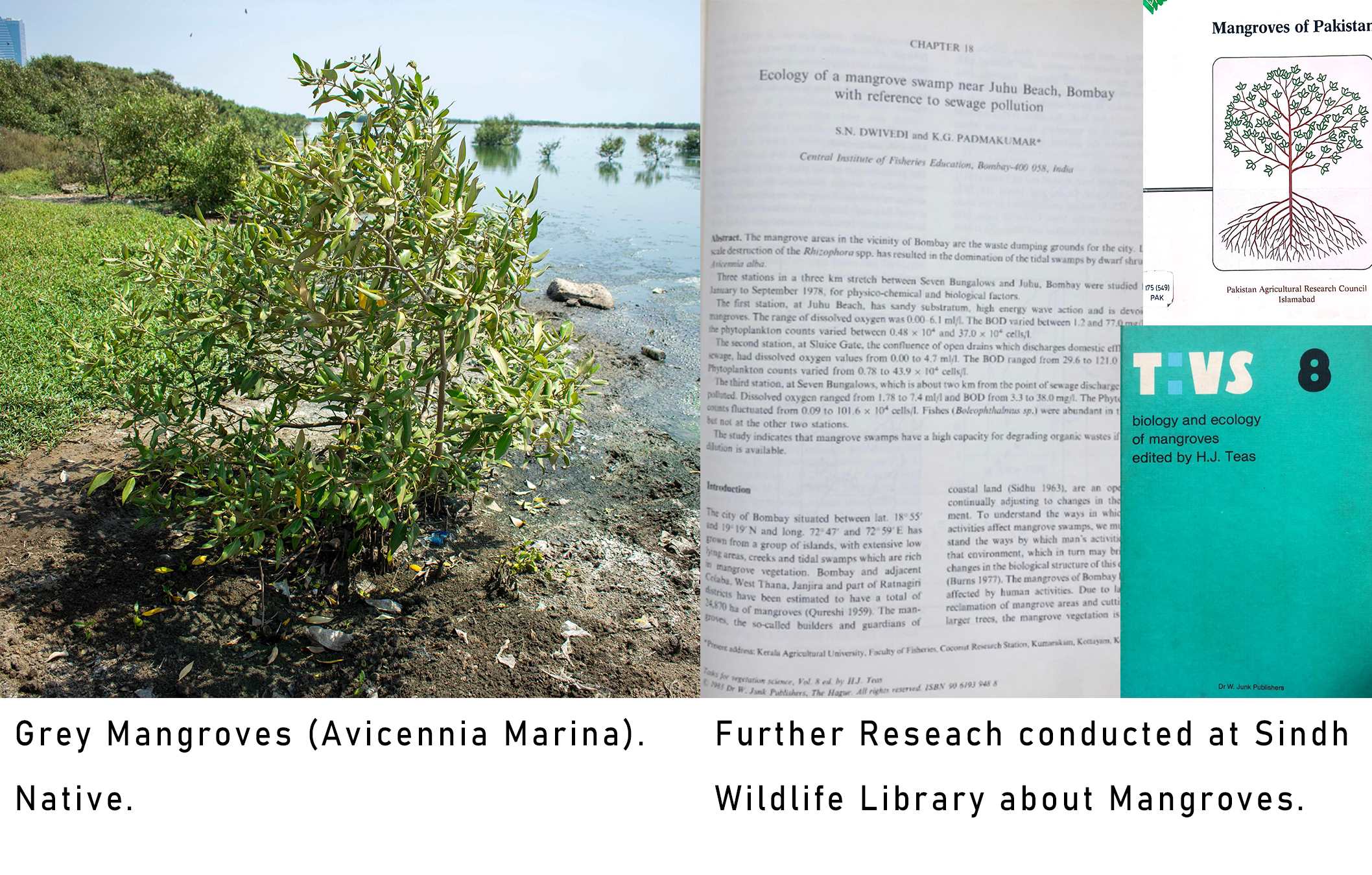
In Karachi and the western edge of the Indus Delta, native mangrove species like the Grey Mangrove (Avicennia marina) and a few Red Mangrove species (Rhizophora mucronata) play a crucial role in maintaining the coastal ecosystem, providing habitat for wildlife and protecting against shoreline erosion. Non-native species, such as the White Mangrove (Sonneratia alba), have been introduced in restoration efforts to increase mangrove cover in degraded areas. While these non-native species have helped boost conservation, they may pose ecological risks by outcompeting native species and altering the habitat. As a result, current efforts at the forest as well as by other initiatives from the Sindh Forestry Department and IUCN, prioritize the restoration and protection of native mangroves to preserve biodiversity and ecosystem balance.