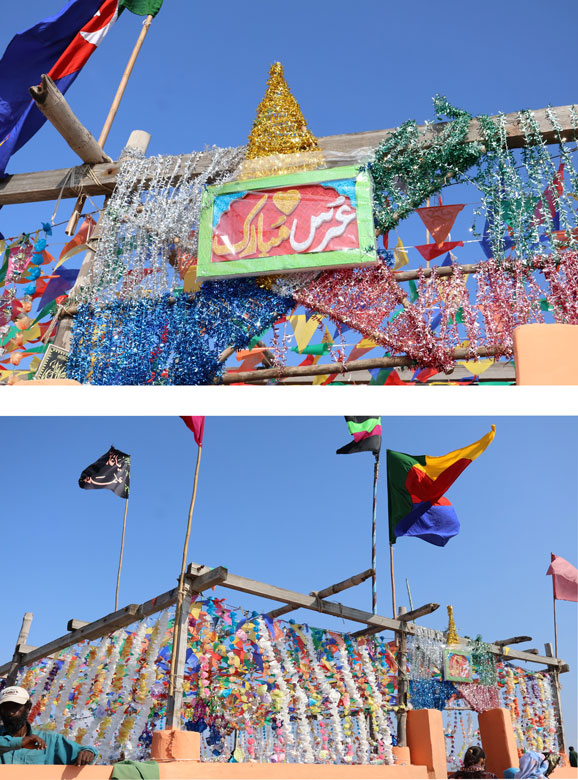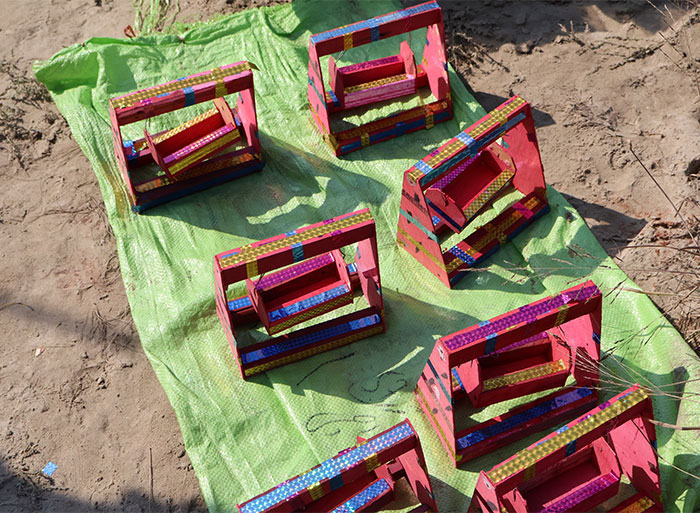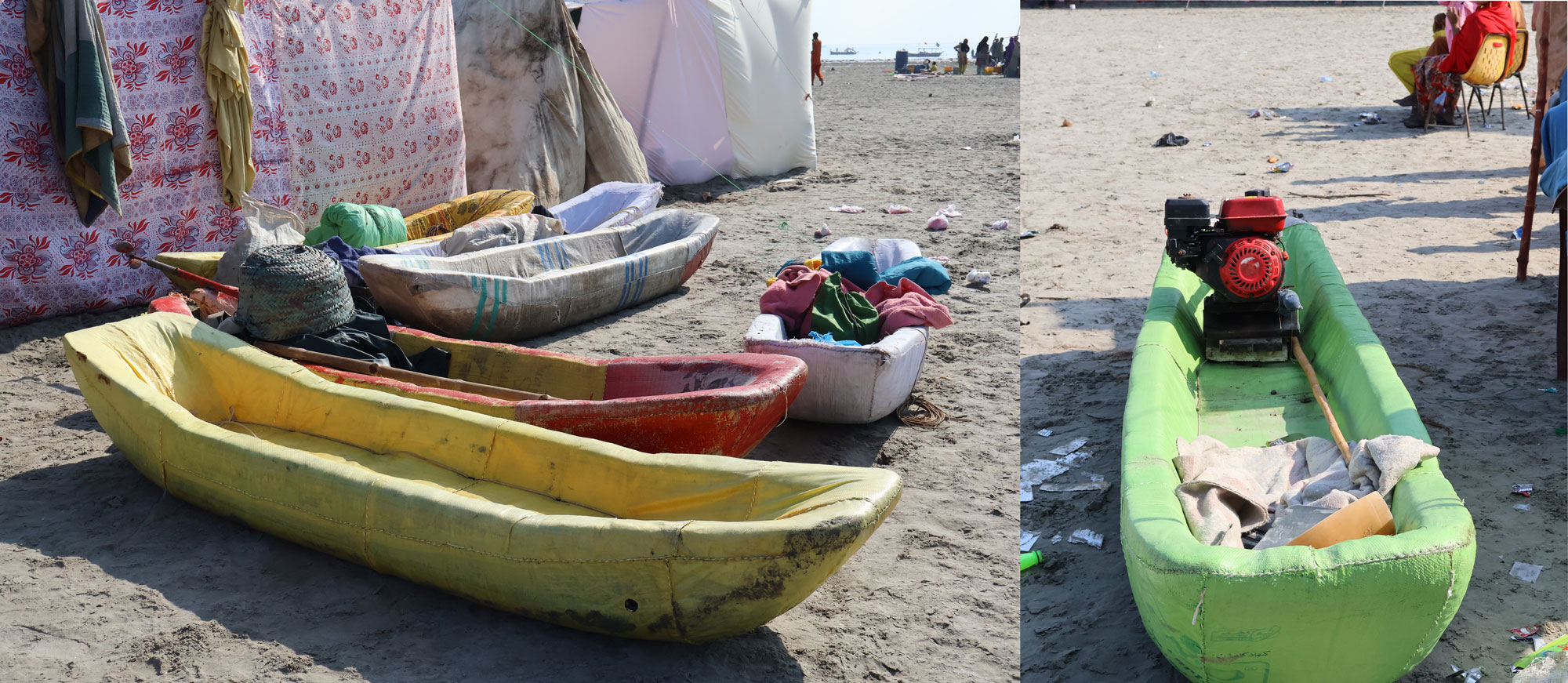
Since the 1990’s Karachi’s coastal economy has been flooded with cheap imported nylon nets made in China locally known as the deadly bholo-gujo nets which are detrimental for thriving oceans as these nets sweep up by-catch and baby fish. The craft of making nets at a cottage-industry level was integral to sustainable practices in Karachi’s coastal community and this has been erased with the use of the bholo-gujo nets.
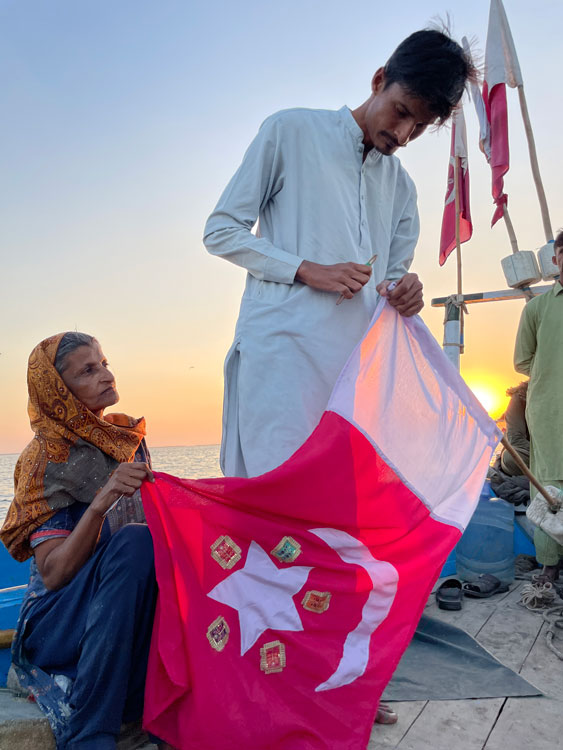
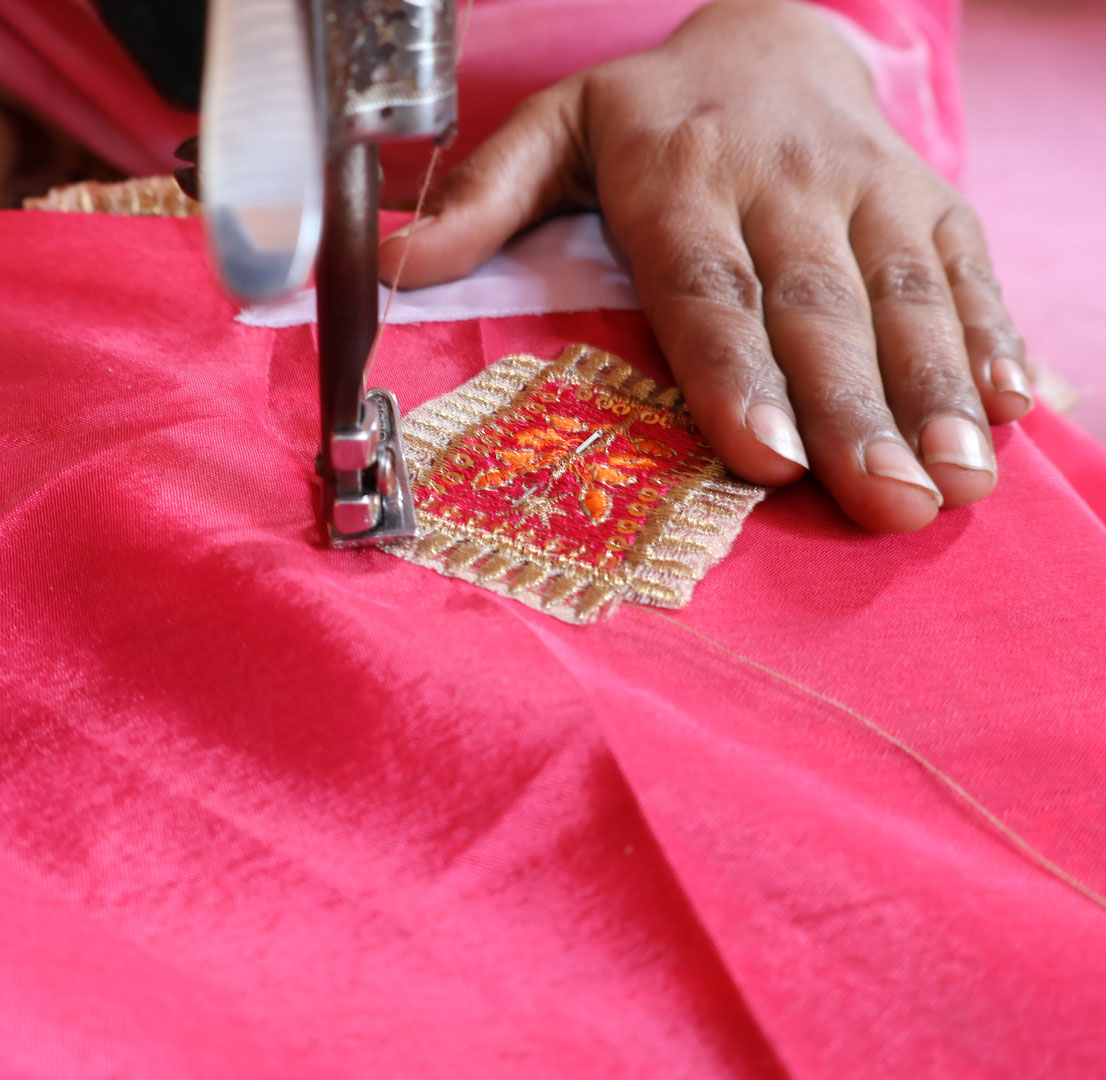
Flags are really the only form of female visibility in the appearance of the boats as mahigeer women primarily take care of the home and do not partake in fishing activities. Women still sew clothes, mend fabrics for furniture and as a result, know how to make flags for the boats which their family members operate. In this project the URA team with Khadija, look at the simplicity of flag making and how that it speaks to the local vernacular. Boat decor and ritualistic knowledge in baptizing, sealing and personalizing the vessel have received minimal attention in research on Sindh’s maritime history. With Samandar-ke-Parcham, the URA acknowledges how most of the resources generated on Pakistan’s coastal economy are in the form of printed reports which speak to at-a-distance research and exist on forums which cater to a foreign lens. The importance of detail in documentation cannot be overstated when it comes to urban craft. Each research output for Samandar-ke-Parcham will capture how the act of making, material resource allocation and coastal ecologies intersect. This careful documentation preserves local knowledge and makes critical environmental issues more accessible for users of the URA website. Bypassing the need for mass printing and physical distribution, this urban craft project is built on the need for artists, art students and researchers, to document and cherish the instinctive and hereditary ways of making tools and decorations across the mahigeer community of Sindh.
Footage credits: Khadija Jamot (Class of 2024), Dua Rabay (Class of 2019 and URA Archiving Assistant), and Shezil Ahmed (Class of 2025)