Logo
Image

Karachi Zoo: Between Awe and Guilt

A zoo represents more than just wildlife- it represents narratives of power, culture, and material existence. Karachi Zoo dates back to 1799 built by the British colonial rule and started off as a garden to cover a factory initiated by East India Company agent, Nathan Crow. Today the zoo, wrangled in its state of neglect yet fascinating discoveries, is a testament to the city’s dynamics of urban mystery. From bright, colorful posters aimed at attracting children, to the unsettling images of cramped, outdated enclosers, the zoo creates a dissonant experience.

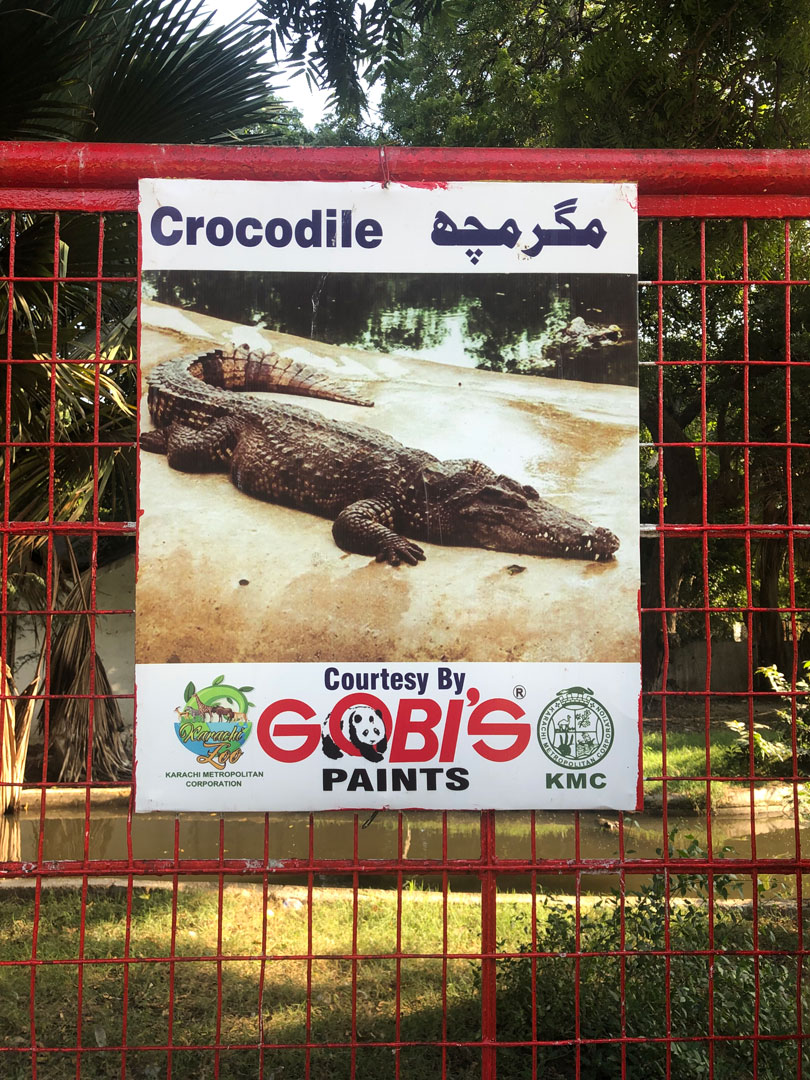
This StoryMap bring forth ideas and notes from a week long research project for their Professional Practice course, responding to the assignment ‘Name, Place, Animal, Thing’ uncovering how animal enclosures in Karachi tell us about our needs for entertainment and the hierarchies of animals and caregivers in the urban city. The separation of animals , like crocodiles, scattered across unsuited cages/enclosures, brings forth the tension between urban development and animal welfare highlighting that maybe, it is time to move on from zoos. Behind the scenes research by the students led to conversations with the zoo caretakers who work tirelessly to keep the animals alive and maintain an environment of spectacle and wonder. Despite the zoo’s cheerful facade, the students highlight the critical need for a deeper conversation about how we interact with animals in captivity. Their research and field visits are informed by archives, existing literature and empathy towards animals, heritage and cohesive design which prioritizes the well being of the animals over convenience of the humans.  

This project was by Khadija Jamot, Ali Hamees, Daniyah Saqib, Sumaiyah Salman, Maham Tareen and Shahroz Danish, students from the graduating class of 2024.Their images and thoughts are shaped by their field work around the zoo, finding it in a condition similar to other heritage sites in Karachi, worn and neglected yet with pockets of weighted history.

A design for exclusion?

Karachi’s zoo can be seen as an iteration of authoritarian control, showing how both animals and their caregivers are affected by the way space is designed and financed. Zoos, meant for education and enjoyment, often end up creating a divide between humans and animals, shaping how both experience this outdated environment. The zoo’s design, its pathways, cages, and fences, restricts movement for both visitors and animals. People are guided along specific routes, and animals are confined to small enclosures. This controlled environment mirrors how cities are often planned, where some people have access to certain areas while others are excluded.

The thing about zoos…

The inhabitants of Karachi Zoo live a life of extreme polarities, tainted with irony and spectacle. Caged and concealed, these birds, reptiles and mammals are exotic imports, brought to this city to be at the ‘center of the stage’. However, as the research by these six students imply, Karachi Zoo has a waning desire to exist with few visitors and even fewer tourists from outside of Karachi. In a struggle to revive interest with short sighted ideas, the zoo continues to import animals yet they do not have the infrastructure or financial capacity to care for these creatures. Struck by the stillness of the zoo, the students found solace in the sounds of birds, a choo-choo train circulating around the sight and pre-recorded announcements across the zoo and scheduled timings.

”As we gathered around the reptile sanctuary, we made notes and shared comparisons of  personal experiences, recollecting our first visits to Karachi Zoo as children.” Today, the stand-alone thriving feature of the zoo are actually their historic Banyan trees which were part of the initial enclosure called Gandhi Gardens. A relic of the past, the trees stand witness to the drastic changing conditions of the zoo. 

I am text block. Click edit button to change this text. Lorem ipsum dolor sit amet, consectetur adipiscing elit. Ut elit tellus, luctus nec ullamcorper mattis, pulvinar dapibus leo.

Feeding the crocodiles

The zoo has a fixed feeding time from 11 a.m. to 12 p.m., though delays until 2 or 3 p.m. are common due to food delivery issues. Captivity prevents crocodiles from hunting their own food. They are fed dead fish dumped into the enclosure, and the crocodiles don’t bother with the live fish swimming in the pond in their enclosure. Stray cats have also been observed stealing their food. The crocodiles requires a bit of a disciplinary game for their meals. Rizwan, a caretaker and butcher, feeds her from a distance, using a long stick to offer meat. As one crocodile pulls the meat from the stick, another silently approaches him from behind. Rizwan quickly drives the stick into its jaw, reminding the animal to keep its distance. Once the crocodile behaves, it too is rewarded with food.

Relics of the past

Part of the research included a visit to Sindh Archives where the students found maps and traced Karachi Zoo  as a public garden named Queen Victoria Garden in 1869 and the zoo was subsequently referred to as ‘Rani Bagh’ i.e. queen’s garden . Combing resources from Mahera Omar, Marvi Mazhar and Associates as well as Pakistan Chowk Community Centre, the Story Map reminds us that this zoo can actually repurpose itself by returning to it’s botanical garden origins as the zoo is home to some of the oldest trees and plants in Karachi. 

Start typing and press Enter to search

Shopping Cart